
Understand comment and file permissions
Comments and files inherit access from both the space role and the record they belong to.
Comments and files inherit access from both the space role and the record they belong to.
Comments
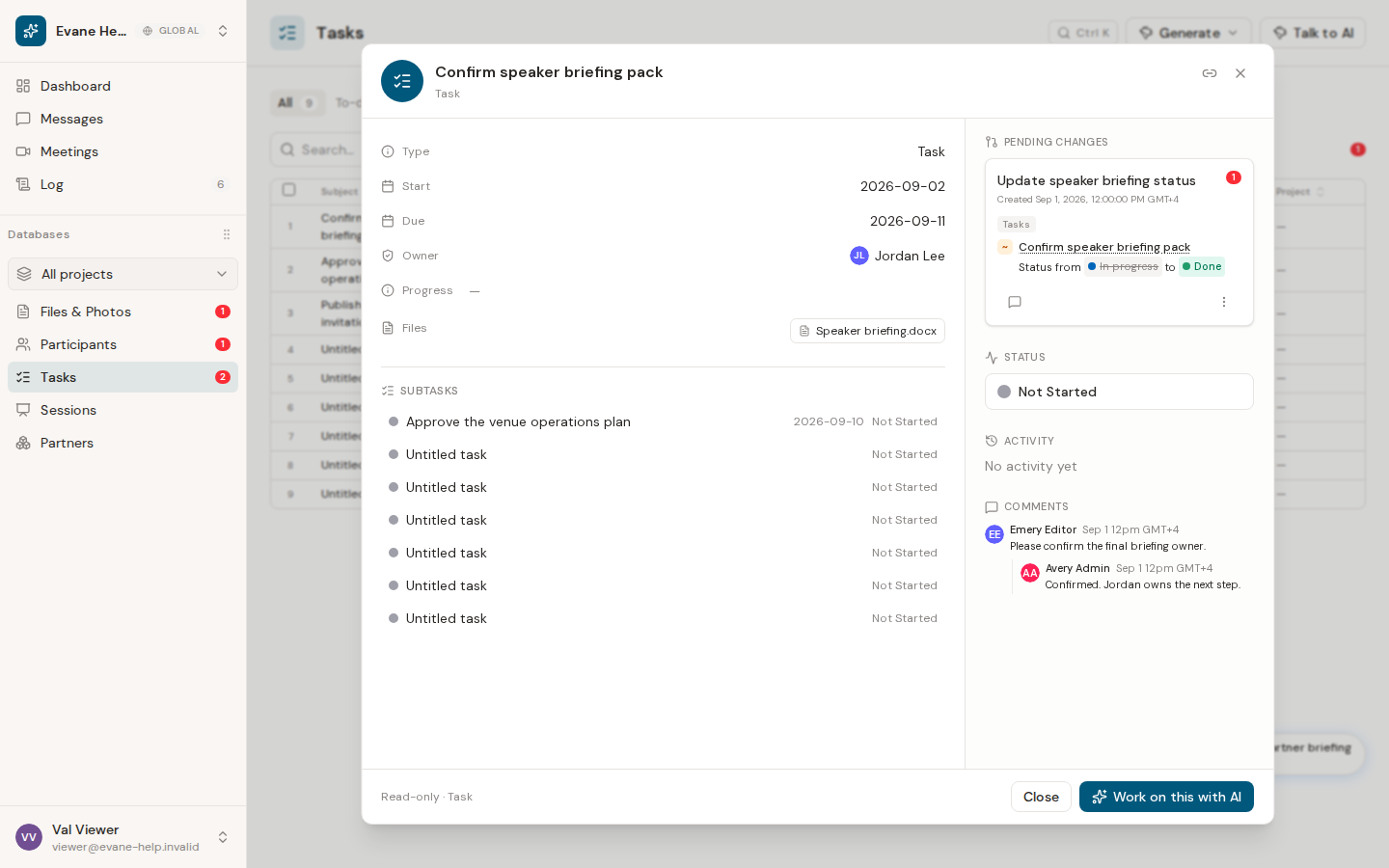
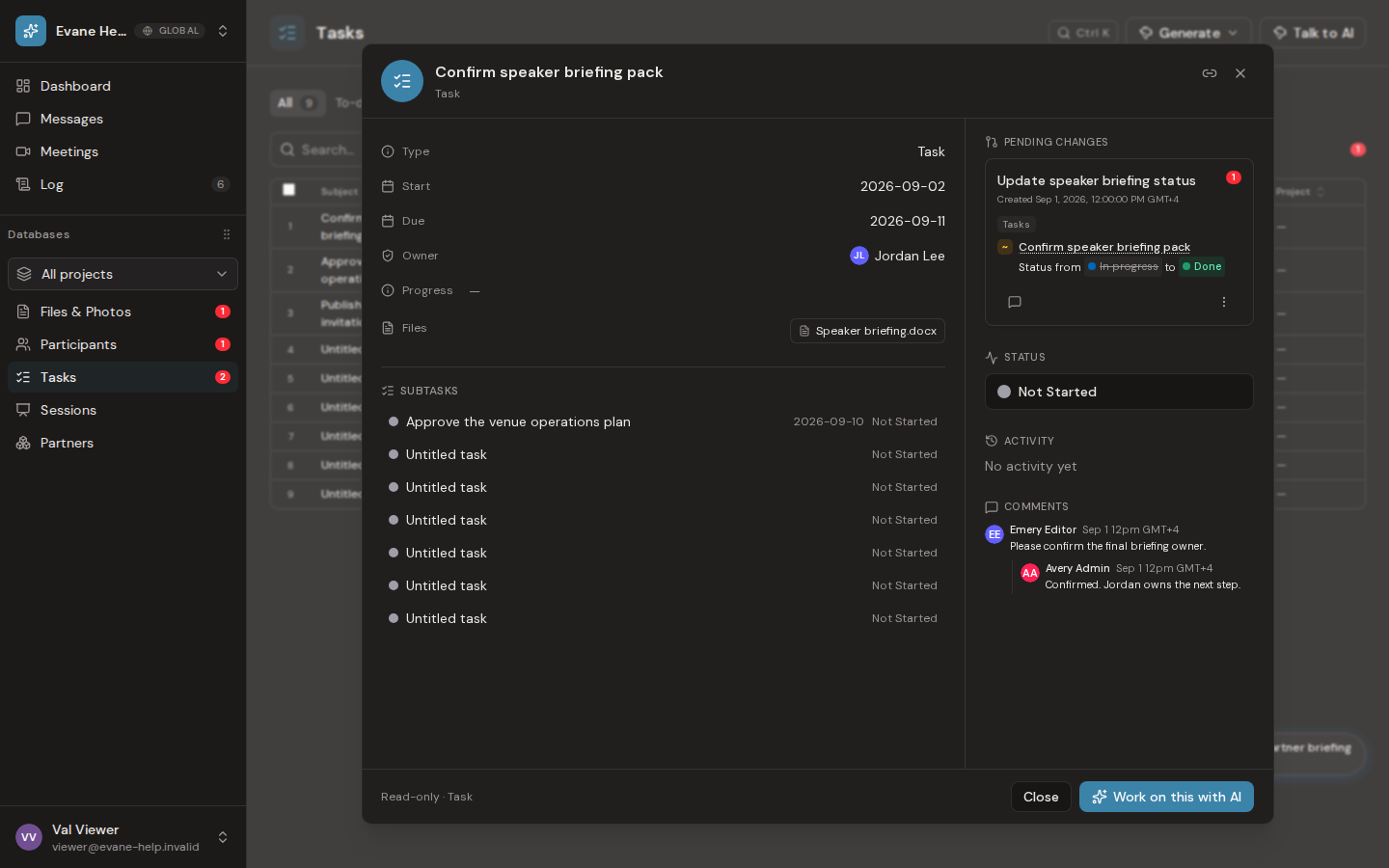
Members who can edit the related entity can post comments and reply to existing threads. A Viewer can read comments but cannot add or reply. Authors may delete their own comments; an Owner or Admin may delete any comment. Deletes are soft, so the discussion can retain a deleted-state marker instead of silently changing history.
Files
Space membership is the read boundary for files inside Formist, so members can read the active space's synchronized file corpus. Opening the original SharePoint, Google Drive, or Lark URL is separate, and the provider can still apply the individual's source-site permissions. Connected-provider files remain read-only in Formist.
Uploading, linking, unlinking, renaming, moving, or copying requires write access. An uploaded file can be deleted by its uploader or an Owner/Admin; generated and legacy files without a known uploader are Owner/Admin-only. Delete moves an Formist-owned file to Trash for 30 days. The current Log > Trash recovery view is available to Owner/Admin roles, and permanent purge is also Owner/Admin-only.
Removing a file link from an entity is different from deleting the stored file. If an action is missing, check both your space role and whether the file is provider-owned or Formist-owned.
Frequently asked questions
Can I permanently erase a comment thread's history?
Not by default. Deletes are soft, so the discussion keeps a deleted-state marker instead of silently changing history; authors can delete their own comments, and an Owner or Admin can delete any comment.
Can I edit a connected SharePoint or Google Drive file from inside Formist?
No. Connected-provider files stay read-only in Formist; opening the original provider URL is a separate action and still subject to that provider's own permissions.
Last verified: